Unpacking Roulette Cashback Thresholds in America's State-Specific Online Casino Environments
Otto Beck · Jul 24, 2026

Unpacking Roulette Cashback Thresholds in America's State-Specific Online Casino Environments
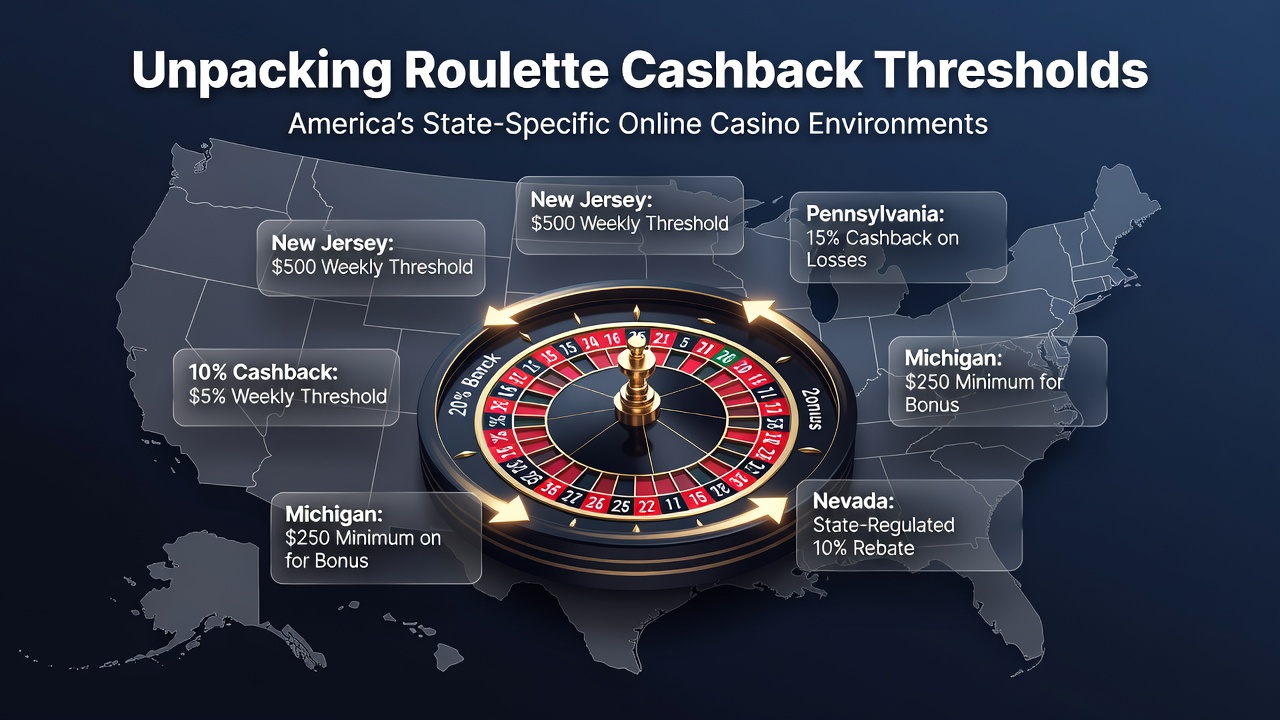
State-regulated online casinos in the United States handle roulette cashback through thresholds that shift from one jurisdiction to the next, and these differences stem directly from local licensing rules plus revenue reporting requirements. New Jersey, Pennsylvania, Michigan, and West Virginia each maintain separate frameworks that dictate minimum loss amounts before cashback activates, along with percentage rates and payout timelines. Data from July 2026 shows operators adjusting these thresholds quarterly to stay aligned with updated compliance standards across multi-state networks.
How State Regulations Shape Cashback Eligibility
Regulators in each state set baseline conditions that operators must follow when designing cashback offers on roulette, and those conditions determine whether a player qualifies after a fixed dollar loss or a percentage of wagers. In New Jersey the Division of Gaming Enforcement requires documented loss tracking before any return activates, whereas Pennsylvania's Gaming Control Board ties thresholds to overall platform revenue reports. Observers note that operators often raise the entry point in states with stricter audit cycles, and this creates measurable variation in how quickly players see returns on roulette play.
Michigan applies a different layer by linking cashback to session length and device verification protocols, while West Virginia focuses on aggregate weekly losses across all table games. Research indicates that these state-specific rules force operators to maintain separate tracking systems, and the result appears in distinct minimum thresholds that range from several hundred dollars in one market to over a thousand in another.
Common Threshold Structures Across Key Markets
Most platforms calculate roulette cashback as a percentage of net losses once a player crosses the defined threshold, and the percentage itself can change based on player tier or total volume. Operators in New Jersey frequently set the bar at $500 net loss for standard accounts, yet they lower it for loyalty members who meet additional play criteria. Pennsylvania sites show similar patterns but often require proof of activity across multiple game categories before releasing funds, and this extra step extends the time between loss and return.
According to the American Gaming Association, interstate data sharing has increased transparency around these thresholds, allowing regulators to compare redemption rates across borders. In Michigan the emphasis remains on real-time verification, which means players must complete identity checks before any cashback processes, and this requirement adds another layer to eligibility. West Virginia platforms, meanwhile, publish monthly threshold updates that reflect local tax adjustments, and those updates directly influence how much roulette play is needed to trigger returns.
Impact of Player Location Data on Threshold Adjustments
Operators analyze location data to fine-tune cashback thresholds because state rules require different reporting frequencies and audit depths. Platforms serving New Jersey players often raise thresholds during peak summer months when regulatory reviews intensify, while Michigan operators adjust based on mobile versus desktop usage patterns. Evidence suggests that these location-driven changes help operators stay compliant while managing payout liabilities across fragmented jurisdictions.
July 2026 figures reveal that redemption rates vary noticeably between states even when the same operator runs the platform, and the variation traces back to how each regulator defines net loss. Players who move between states through multi-state accounts encounter different qualifying amounts, and operators must display those differences clearly in promotional terms. This geographic segmentation prevents uniform offers and forces separate marketing strategies tailored to each regulatory environment.
Tracking and Verification Requirements by State
Verification protocols differ sharply across states, and those differences affect how quickly cashback clears after the threshold is met. New Jersey demands daily loss reports uploaded to the state system, Pennsylvania requires weekly summaries, and Michigan integrates device fingerprint checks into every payout request. The Nevada Gaming Control Board maintains similar standards for its limited online offerings, providing a comparative benchmark that other states reference during policy updates.
These verification steps create practical delays that players must factor into session planning, yet they also reduce disputes by establishing clear audit trails. Operators respond by publishing state-specific guides that list exact threshold amounts and required documentation, and those guides update whenever regulators issue new circulars. The result is a landscape where roulette cashback functions reliably only when players understand the rules that apply to their registered state.
Conclusion
Roulette cashback thresholds in America's state-specific online casino environments reflect the underlying regulatory architecture that governs each market, and the differences become visible through minimum loss requirements, verification steps, and payout timelines. Data collected through July 2026 confirms that operators continue to refine these parameters in response to evolving compliance demands. Players benefit from reviewing the rules posted for their home state before engaging in extended roulette sessions, because eligibility hinges on meeting location-specific conditions rather than uniform national standards.