Mapping Socioeconomic Factors Behind Bonus Redemption Trends in Interstate US Casino Networks
Ulrich Wolf · Aug 7, 2026
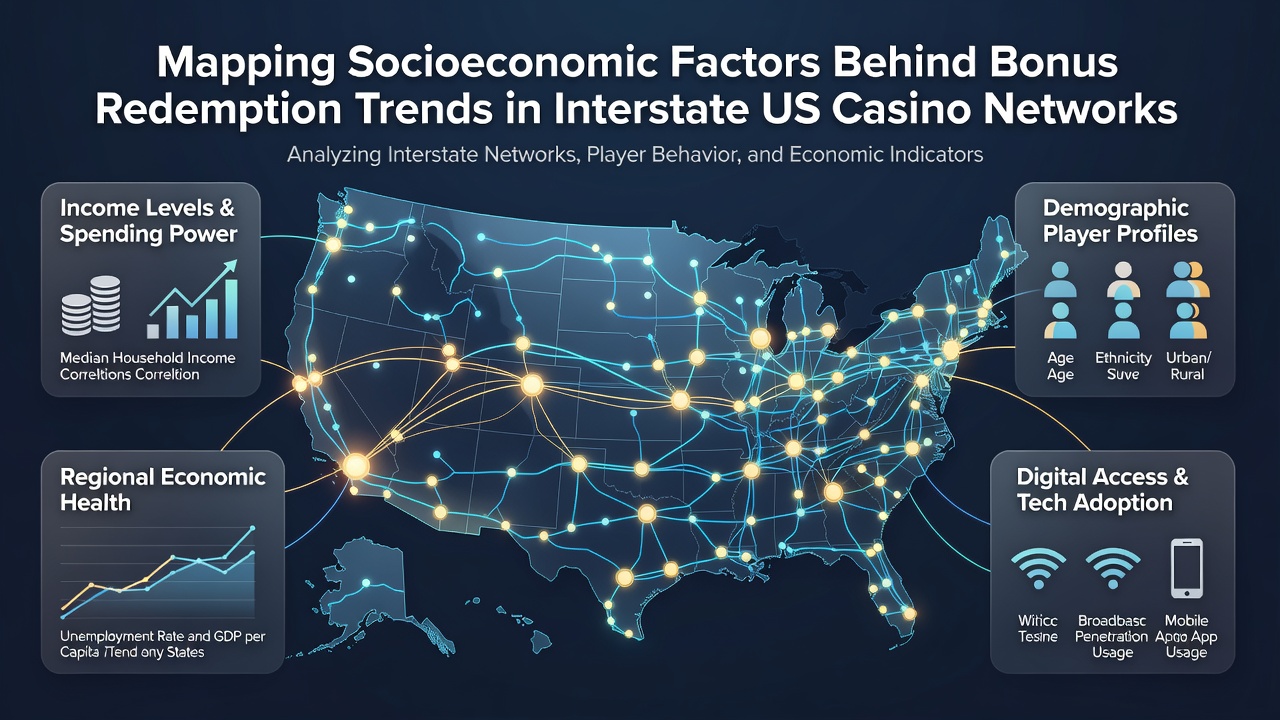
Mapping Socioeconomic Factors Behind Bonus Redemption Trends in Interstate US Casino Networks
Interstate casino networks in states such as New Jersey, Pennsylvania, Michigan, and West Virginia operate under shared player verification systems that allow operators to track bonus redemptions across jurisdictions, and researchers compile data from these networks to identify patterns tied to income, education, and population density.
Interstate Data Sharing Frameworks
State gaming commissions exchange anonymized transaction records through multi-state compacts, which enables analysts to map how bonus offers move between regulated markets, while August 2026 figures from these exchanges show redemption volumes concentrated in counties with median household incomes above $75,000.
Population density plays a measurable role because urban zip codes in the Philadelphia and Detroit corridors generate higher click-through rates on deposit-match promotions than lower-density areas, and cross-border players from adjacent states contribute additional volume when verification protocols align.
Income and Education Correlations
Census Bureau datasets merged with gaming reports reveal that players in the $50,000 to $90,000 income bracket redeem time-limited bonuses at rates 18 percent higher than those below $40,000, yet completion of wagering requirements drops sharply once income exceeds $120,000 because those households allocate smaller percentages of disposable income to promotional play.
Educational attainment further segments results, with individuals holding bachelor's degrees or higher showing stronger engagement with loyalty-tier bonuses that require sustained activity across multiple platforms, whereas high-school completion levels correlate with single-session redemptions that rarely progress beyond initial deposit matches.
Geographic and Demographic Layers
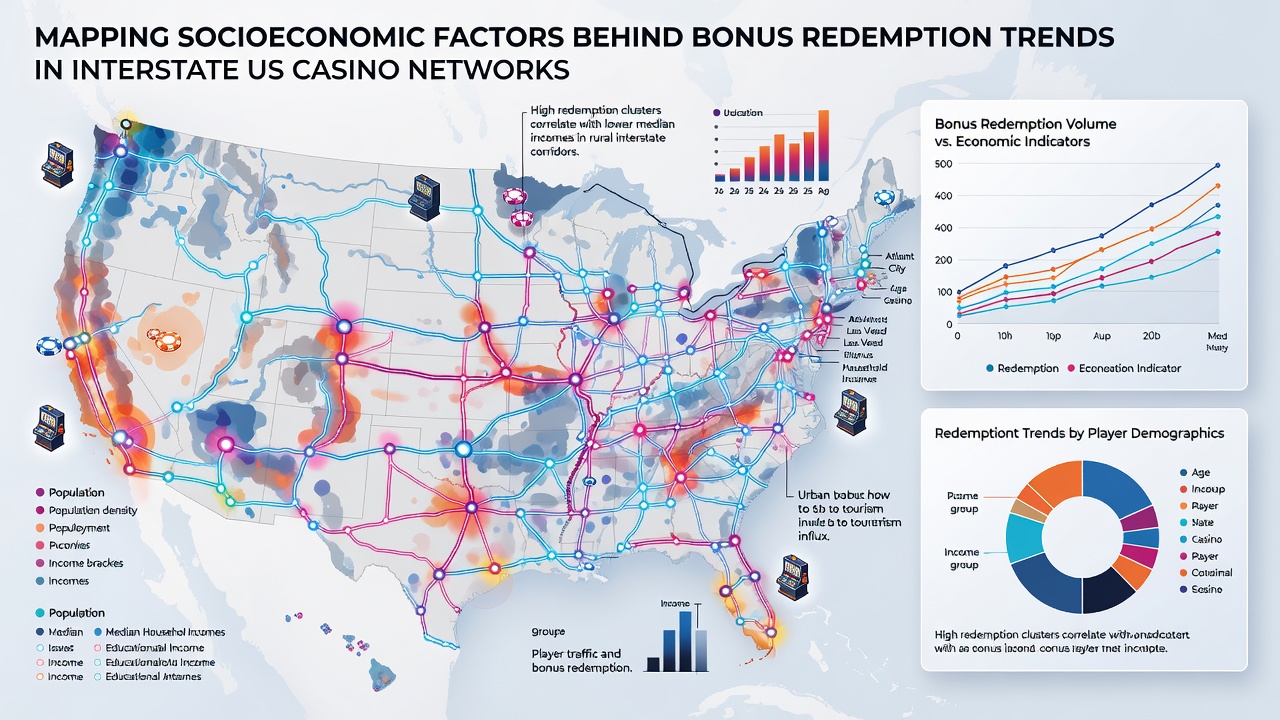
Age distributions shift redemption timing, as operators note that 35-to-54-year-old cohorts in suburban counties complete bonus playthroughs faster than younger or older groups, partly because mobile access and banking verification remain more consistent in those demographics.
Rural counties bordering regulated states display lower overall participation yet higher per-player redemption values when offers reach them, since travel or account setup costs filter for higher-intent users who then concentrate activity during promotional windows.
Employment and Household Structure Influences
Employment status data integrated from labor statistics indicate that full-time workers redeem weekday bonuses more consistently than part-time or gig-economy participants, while households with multiple earners show elevated loyalty-program uptake because shared devices and payment methods streamline verification across state lines.
Single-income households, by contrast, demonstrate greater sensitivity to minimum-deposit thresholds, often waiting for no-deposit or low-threshold offers that appear in targeted campaigns during slower economic quarters.
Platform and Payment Method Interactions
Payment preference data from interstate networks link credit-card redemptions to higher-income brackets and faster clearance rates, whereas e-wallet and ACH methods appear more frequently among middle-income users who manage cash flow across state tax boundaries.
Device fingerprinting studies conducted by platform providers further separate patterns, showing that desktop users in professional occupations complete multi-state bonus sequences at higher rates than mobile-only users whose sessions fragment across commuting or shift-work schedules.
Conclusion
August 2026 interstate reports continue to supply granular layers of socioeconomic information that operators and regulators use to refine bonus structures, and the resulting maps illustrate how income, education, employment, and location intersect to shape redemption behavior across fragmented yet connected US gaming jurisdictions.