How Demographic Trends Reshape Roulette Reward Allocations in America's Expanding State Networks
Kai Keller · Jun 14, 2026
How Demographic Trends Reshape Roulette Reward Allocations in America's Expanding State Networks
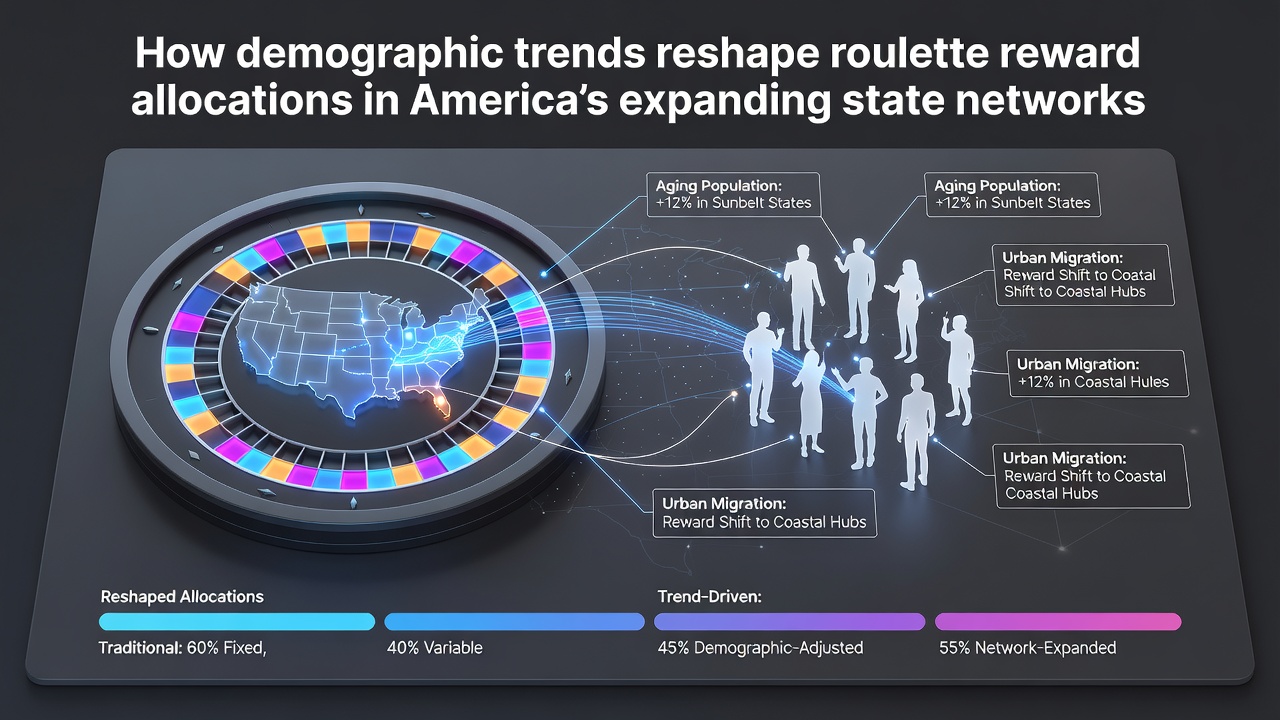
Demographic changes continue to influence how state-regulated gaming networks distribute roulette rewards, as population movements and age distributions alter player bases in jurisdictions that have expanded legal options since 2020. States such as New York and Massachusetts have incorporated new market data into their allocation models, adjusting promotional structures to match shifts in resident numbers and mobility patterns that data from the US Census Bureau tracks annually.
Population growth in urban corridors has prompted regulators to recalibrate reward tiers, with allocations favoring mobile-accessible offers in areas where younger cohorts concentrate. This adjustment occurs because interstate compacts now share anonymized location data that highlights where roulette participation clusters, allowing networks to direct free-play credits toward regions experiencing net inflows from domestic migration.
Age Distribution Patterns and Reward Structuring
Analysts examining American Gaming Association reports note that states with higher percentages of residents aged 25 to 44 have expanded tiered loyalty credits for roulette variants that support shorter session times. These structures differ from allocations in markets where the median age exceeds 42, where reward programs emphasize table-limit bonuses that extend play duration across evening hours. Such differentiation emerges directly from participation metrics compiled through state gaming control boards.
June 2026 data releases from several regulatory bodies revealed measurable upticks in reward redemptions among newly eligible age groups in Pennsylvania and Michigan, coinciding with expansions that added roulette to existing sports wagering platforms. The patterns show that networks allocate higher-value sign-up credits in counties registering population gains above the national average, while maintaining baseline offers in stable rural zones.
Migration Flows and Interstate Allocation Adjustments
Internal migration toward Sun Belt states has required gaming commissions to revise how promotional pools distribute across shared player databases. When residents relocate from established markets like New Jersey into expanding ones such as Arizona, verification protocols transfer historical play data that informs reward eligibility without resetting accumulation thresholds. This continuity prevents duplicate allocations while allowing operators to target returning players with location-specific roulette incentives.
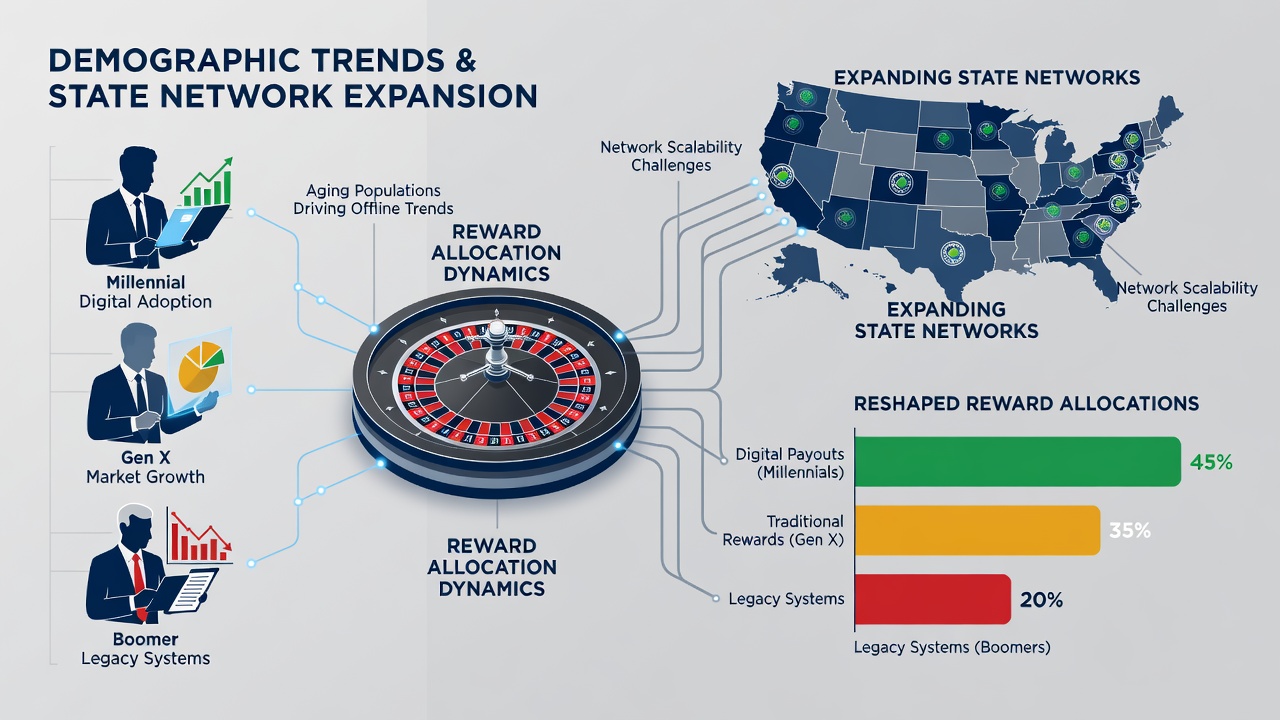
Observers tracking these flows through compact agreements find that reward budgets shift quarterly based on census tract updates, directing larger portions of no-deposit credits toward metro areas absorbing higher volumes of working-age adults. The mechanism relies on aggregated rather than individual data, maintaining compliance with privacy standards embedded in each state's regulatory framework.
Urbanization Effects on Promotional Delivery
Concentrated urban growth correlates with increased demand for device-agnostic roulette rewards, leading networks to prioritize instant-redeem options over mail-in formats that once dominated in less dense regions. State reports indicate that cities experiencing rapid household formation receive proportionally larger shares of match-play funds because transaction volumes justify the administrative overhead of real-time distribution systems.
Those monitoring enrollment figures across multi-state platforms observe that demographic density influences the cadence of reward refreshes, with high-density zones seeing weekly top-ups while lower-density areas operate on monthly cycles. The distinction arises from cost-efficiency calculations tied directly to player concentration rather than subjective preference assessments.
Ethnic and Household Composition Influences
Changes in household composition tracked by federal statistical agencies affect how operators structure family-oriented reward bundles that sometimes bundle roulette credits with other verticals. Jurisdictions registering increases in multi-generational households have introduced shared account features that allocate portions of promotional value across linked profiles, a development driven by verification technology capable of handling grouped eligibility.
Evidence from regulatory filings shows these adaptations occur alongside expansions into new states, where initial reward allocations incorporate baseline demographic profiles before fine-tuning occurs after six months of operational data collection. The process ensures allocations reflect actual rather than projected participation rates.
Conclusion
State networks continue refining roulette reward allocations through ongoing integration of demographic datasets that capture population dynamics across expanding jurisdictions. These adjustments operate within established regulatory parameters and rely on aggregated metrics that preserve individual privacy while enabling precise distribution of promotional value. The resulting frameworks demonstrate how measurable population characteristics translate into operational changes in gaming reward systems.